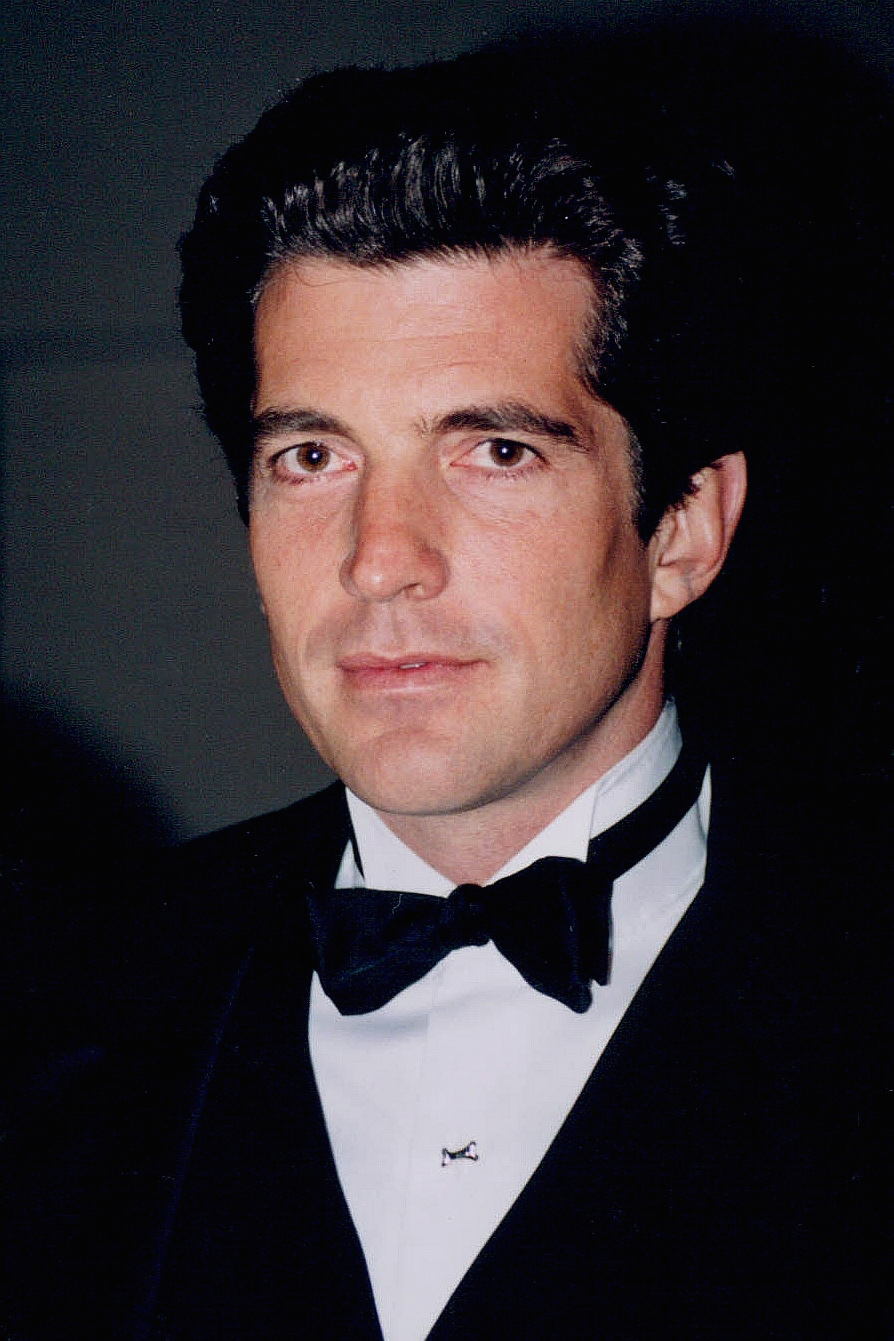
John F. Kennedy Jr.'s Vision: More Than Just a Magazine
Few figures in American history have navigated the complex intersection of politics, celebrity, and public expectation quite like John F. Kennedy Jr. Born into the nation's most iconic political dynasty, his life was perpetually under the spotlight. Yet, it was through his groundbreaking venture, *George* magazine, that JFK Jr. truly forged his own path, redefining how Americans consumed political discourse by seamlessly blending it with the vibrant world of pop culture and entertainment. Launched in the mid-1990s, *George* wasn't just another glossy publication; it was a bold statement, a daring experiment to democratize politics and make it accessible, engaging, and even stylish for a broader audience.
From the moment of his birth, just weeks after his father's triumphant presidential election, John F. Kennedy Jr. was destined for an extraordinary life. The profound tragedy of his father's assassination when he was nearly three years old etched his image—the small boy saluting his father's casket—into the national consciousness, forever linking him to the myth of Camelot. Growing up, this immense legacy presented both privilege and pressure. Despite a privileged upbringing, he earned a degree in American Studies from Brown University and a Juris Doctor from New York University School of Law, subsequently serving nearly four years as an assistant district attorney in Manhattan. These endeavors showcased a commitment to public service and intellect, yet the question always loomed: would he follow in the political footsteps of his father and uncles? JFK Jr. chose a different, albeit equally impactful, route, channeling his unique position and intellect into a media venture that reflected his own identity and vision for the future of political engagement. His journey to establish independence from his family’s legacy is a compelling narrative, explored further in JFK Jr.'s Quest for Identity: Beyond the Kennedy Legacy.
The Genesis of George: A Radical Idea for the 90s
The 1990s media landscape was a paradox. Cable news was growing, but political reporting often remained insular, catering to a niche audience already deeply engaged. Mainstream magazines focused either on hard news or lifestyle and entertainment. John F. Kennedy Jr. saw a void and, more importantly, an opportunity. He believed that politics, at its core, affected everyone and should be presented in a way that resonated with everyday Americans, not just Beltway insiders.
This conviction gave birth to *George*, a monthly magazine he founded and edited in 1995. The name itself, a nod to America's first president, George Washington, signaled a foundational approach to politics, yet its content was anything but traditional. JFK Jr.'s genius lay in his understanding that engagement stemmed from relevance and presentation. He envisioned a publication that would treat politics not as a dry, academic subject, but as an integral, dynamic part of contemporary culture, much like fashion, music, or film. This meant breaking down the conventional barriers between serious journalism and popular entertainment.
George was meticulously crafted to be visually stunning, a glossy monthly designed to catch the eye on newsstands alongside lifestyle and fashion magazines. Its mission was explicit: "to make politics accessible and engaging to a broader audience." This was a pioneering concept, anticipating the blurring lines between news and entertainment that would become commonplace in the digital age. By refusing to shy away from celebrity covers or lifestyle features while simultaneously delivering insightful political commentary, JFK Jr. proved that intellect and accessibility were not mutually exclusive.
Designing for Engagement: The George Approach
- Visually Driven: High-quality photography and bold graphic design made *George* stand out. It looked less like a political journal and more like a high-fashion or entertainment magazine.
- Unconventional Covers: *George* famously put political figures in unexpected guises (e.g., Bill Clinton as Abraham Lincoln, Rudolph Giuliani as George Patton, Drew Barrymore as Marilyn Monroe channeling JFK). These covers immediately grabbed attention and signaled the magazine's unique blend.
- Relatable Content: Articles tackled political issues from a human perspective, often through interviews with celebrities who spoke about their civic engagement, or fashion spreads featuring political figures.
- Diverse Voices: The magazine aimed to represent a wide spectrum of political thought, fostering dialogue rather than partisanship.
Bridging the Divide: How George Redefined Political Discourse
The true innovation of *George* lay in its fearless embrace of juxtaposition. Where other publications compartmentalized, John F. Kennedy Jr. sought synergy. He understood that many Americans, especially younger generations, weren't tuning into Sunday morning political talk shows but were deeply invested in popular culture. By bringing politics into *their* space, he hoped to spark a new kind of civic curiosity.
Consider the magazine's iconic covers. It wasn't uncommon to see a supermodel dressed as a founding father or a Hollywood star interviewing a presidential candidate. This wasn't merely a gimmick; it was a deliberate strategy to lower the barrier to entry for political engagement. If a reader picked up *George* for an article on a film star, they would inevitably encounter intelligent political commentary, policy debates, or profiles of emerging political leaders. This "Trojan horse" approach was remarkably effective, transforming what many perceived as a dry subject into something vibrant and relevant.
JFK Jr. himself embodied this blend. His striking good looks, personal charm, and status as a perpetual tabloid fixture could have overshadowed any serious endeavor. Instead, he leveraged his unique position to bring an unprecedented level of glamour and accessibility to political journalism. He interviewed politicians, wrote thoughtful editorials, and shaped the magazine's editorial direction, demonstrating that serious engagement with civic issues could coexist with a sophisticated appreciation for pop culture and personal style. His ability to navigate these worlds was unparalleled, offering a unique perspective that transcended the traditional media silos. For an in-depth look at his broader impact, read JFK Jr.'s Enduring Legacy: Camelot, Career, and Tragic End.
This approach wasn't without its critics. Some purists argued that *George* trivialized politics, reducing serious issues to celebrity fodder. However, John F. Kennedy Jr. remained steadfast in his vision. He believed that the goal was not to dumb down politics, but to intelligent-up pop culture, inviting a wider audience to the conversation rather than alienating them with insider jargon and inaccessible formats. In essence, he understood that to capture the imagination of a generation increasingly saturated with entertainment, politics needed to be presented as equally compelling.
Legacy and Lasting Impact of George
*George* magazine, despite its relatively short lifespan, left an indelible mark on the media landscape. Its publication ceased shortly after John F. Kennedy Jr.'s tragic death in a plane crash in 1999, bringing an abrupt end to what many believed was just the beginning of his true potential as a media innovator. At its peak, *George* boasted a circulation of 400,000, demonstrating a significant appetite for its unique blend.
The magazine’s influence extends far beyond its circulation numbers. It pioneered a style of political coverage that anticipated the future. Today, it's common to see politicians on late-night talk shows, celebrities advocating for policy changes, and news outlets adopting more engaging, multimedia-rich formats. *George* was a harbinger of this trend, proving that a serious message could be delivered through an entertaining medium.
Lessons from JFK Jr.'s Media Vision for Today
Modern media creators can learn a great deal from John F. Kennedy Jr.'s approach with *George*:
- Audience-First Approach: Understand where your audience consumes information and present your content there, in their preferred format.
- Break Down Silos: Don't be afraid to merge seemingly disparate topics. Innovation often lies at the intersection of different fields.
- Visual Storytelling: In an increasingly visual world, strong aesthetics are crucial for engagement and differentiation.
- Authenticity Over Purity: Prioritize genuine engagement and accessibility over strict adherence to traditional formats that might alienate a broader audience.
- Leverage Personal Brand (Responsibly): JFK Jr. used his unique identity not to self-aggrandize, but to open doors and bring attention to civic issues.
In many ways, *George* was ahead of its time. It embraced the idea that political engagement didn't have to be stuffy or exclusive but could be a vibrant, stylish, and integral part of contemporary life. John F. Kennedy Jr., a man who consistently sought to define himself beyond his celebrated name, found his most distinct voice in the pages of *George*, proving that he was not just a symbol of a past era, but a visionary who shaped the future of media.
Ultimately, *George* magazine stands as a testament to John F. Kennedy Jr.'s ingenuity and his enduring commitment to civic life. He understood that to inspire a new generation, politics needed a makeover, a fresh perspective that spoke their language and met them where they were. Through his bold creation, he didn't just publish a magazine; he published a vision for a more engaged, informed, and culturally connected citizenry, leaving a legacy that continues to resonate in today's dynamic media landscape.